
Newsletter
Join the Community
Subscribe to our newsletter for the latest news and updates
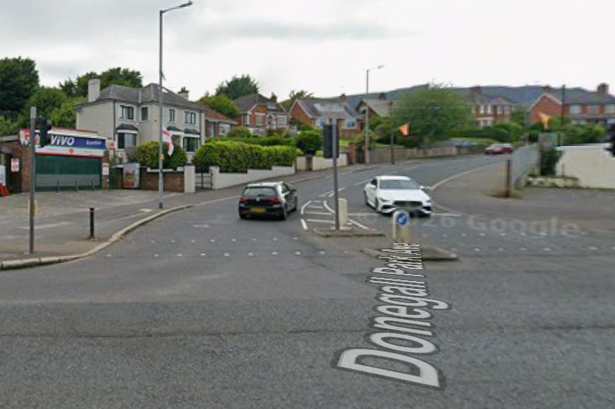
Decisions on Donegall Park Avenue and Oldpark Road for 'appropriate' signage have been reversed
2026/07/02
Green Party votes have pushed through a decision to erect Irish and English dual language street signs at unionist parts of two North Belfast streets. At the full monthly meeting of Belfast City Council on Wednesday, a committee decision to place Irish/English street signs only at nationalist parts of Donegall Park Avenue and Oldpark Road was reversed, as the Green Party became kingmakers in the full chamber. Both streets passed the required 15 percent occupier threshold for dual language signage to be erected. Last month the council’s People and Communities Committee made decisions on so-called “long roads” on whether they should receive dual language signage along the full lengths of those streets, or at sections where it would be deemed “appropriate.” : DUP accuse Sinn Féin of "mental gymnastics" over Irish dual language street signs : Ban on rogue lockboxes being considered by Belfast City Council to stop party houses and clutter On Oldpark Road, the committee unanimously decided to place Irish and English dual language street signs at “suitable” parts of the street. Donegall Park Avenue proved to be the most controversial, and on a tight vote pushed through by the DUP and Alliance, the committee decided to place Irish and English dual language street signs again only at certain “suitable” parts, that is, at nationalist sections of the street. A decision on a third street, Skegoneill Avenue, was deferred until August. However, at the full council meeting this week, the decisions on Donegall Park Avenue and Oldpark Road were reversed. A Sinn Féin proposal for both streets to receive signage along their full lengths received 31 votes in favour from Sinn Féin, the SDLP, the Green Party and People Before Profit, to 25 votes against, from the DUP, Alliance, the UUP and TUV. A Green Party proposal to erect Irish English signage at two streets in West Belfast , Caffrey Avenue and Glenwood View, was successful despite neither meeting the 15 percent threshold. On a vote 31 were in favour of the proposal, from Sinn Féin, the SDLP, the Green Party and People Before Profit, while 25 voted against, from the DUP, Alliance, the UUP and TUV. A Sinn Féin proposal to erect Irish English signage at Pilot Street, which did not reach the 15 percent threshold and received one objector, failed, with 28 votes in favour from Sinn Féin, the SDLP, and People Before Profit, to 29 votes against, from the DUP, Alliance, the UUP, TUV and the Green Party Donegall Park Avenue, from the Antrim Road to the Castle Gardens junction, is considered a nationalist area, while Castle Gardens to the Shore Road would be considered a unionist area. In the survey for Donegall Park Avenue 74 occupiers, that is 36.10 percent of all occupiers in the whole street, were in favour of the erection of a second street name plate. 53 occupiers, that is 25.85 percent, were not in favour of the erection of a second street name plate. Over a third of the street did not reply. At Oldpark Road, those sections at the top, from the junction of Ballysillan Road, and at the bottom, from the junction with Crumlin Road, are considered unionist areas, while the central section known as the “Bone” is considered nationalist. In the survey for Oldpark Road 136 occupiers, that is 17.99 percent of all occupiers in the whole street, were in favour of the erection of a second street name plate. 58 occupiers, that is 7.67 percent, were not in favour of the erection of a second street name plate. Five occupiers, 0.66 percent, had no preference either way, and the rest did not reply to the survey. Almost three quarters of the street did not reply. The council’s dual language street sign policy states: “Consideration will be given to “long streets” where opinion on whether to have a second language street sign may differ between readily identifiable, substantial lengths of the street. In these circumstances, the decision as to the erection of dual language nameplates in certain portions of the street will be made by the committee, exercising its residual discretion and taking into account advice from officers.” At the full council meeting this week, Sinn Féin Councillor Tomás Ó’Néill proposed erecting Irish and English dual language street signs for the full length of Donegall Park Avenue and Oldpark Road. He further proposed that Pilot street in the Sailortown area receive Irish English street signs, despite not meeting the 15 percent threshold, by using “discretionary” powers. 92 surveys were distributed at Pilot Street. There were 10 replies, nine of which were in favour, one in opposition, that amounts to 9.78 percent of the street in totality showing support for the new dual language signage. Councillor Ó’Néill said: “Provision of these signs creates the opportunity for greater cultural linguistic diversity, and for people to engage with other languages and other cultures. If we continue to shy away into our own communities, it is in these dark holes where (negative) views are fostered.” DUP Alderman Dean McCullough said in reference to Donegall Park Avenue: “If this proposal is carried tonight, I believe it will be a profoundly unwise decision. I fear it risks damaging community relations and creating entirely avoidable tension, in what is today a settled community.” He added: “Anyone who knows Donegall Park Avenue knows it is exactly the type of street this policy was designed for. It is a long street, it is not homogenous, there are clearly identifiable sections with different views.” He said: “I know the area well. The consultation demonstrated opinion differed markedly between the upper and lower sections of the avenue. Anyone that knows that avenue knows there is a vast difference, in terms of the desire for the Irish language at the top and the bottom. “The sensible compromise is to provide signage where it is wanted, and not impose it where it is clearly not wanted. That respects both communities, it reflects the reality on the ground, and most importantly it is entirely consistent with the policy.” Green party Councillor Áine Groogan said: “I think it is incredibly problematic to say that the Irish language is okay in certain parts of a street, but not okay elsewhere. It creates an incredibly dangerous precedent.” She said: “I don’t understand where we start drawing a line between what is a long street, and what isn’t a long street, and how we divide it. That for me creates a lot more problems than just normalising and promoting the language for what it is.” She said: “We need to put this beyond politics, and beyond designating an area as one community or another community. We are trying to get beyond that, and that is why the most logical and simplest approach is whenever a street in its entirety meets the policy threshold (to erect signage).” Councillor Groogan proposed erecting Irish English dual language signage at Caffrey Avenue of the Glen Road in West Belfast, and Glenwood View, near Stewartstown Road in West Belfast. Both streets did not meet the threshold of 15 percent, but neither had any objections in the surveys. She said the Greens would not support new signage at Pilot Street, stating that the party’s approach to date was to use discretionary powers only when there is no opposition in the surveys. Caffrey Avenue saw 162 surveys, of which there were only 24 replies, all in favour of Irish English signage. That amounted to 14.81 percent. Glenwood View saw 54 surveys, of which there were only seven replies, all in favour of Irish English signage That amounted to 12.96 percent. DUP Councillor Sarah Bunting said at the meeting: “I am sick of talking about this every single month. But there is no consistency from the parties opposite. Every month they come up with a new way to try to rewrite the policies that they agreed, that they wrote, and that we didn’t agree to. Now they have decided they want to push even more at the unionist community.” She proposed all the decisions at the People and Communities Committee in June, where it was decided new signage would only be placed in "appropriate” areas, to be ratified. This did not go to a vote after the successful Sinn Féin and Green Party proposals. For all the latest news, visit the homepage here and sign up to our daily newsletter here.