
Newsletter
Join the Community
Subscribe to our newsletter for the latest news and updates
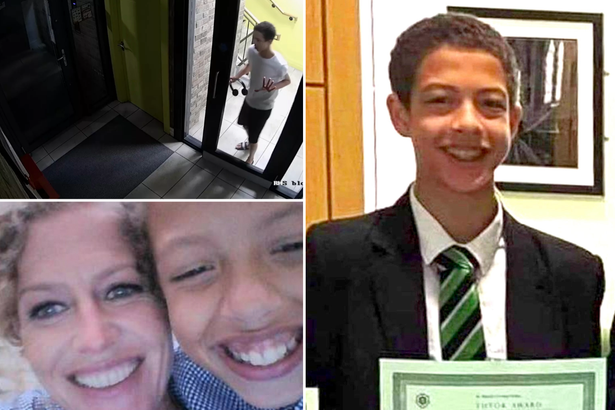
The long-running inquest into the death of the 14-year-old is being heard with a jury at Belfast Coroner's Court
2026/06/14
Need to know Key points after 19th week of Noah Donohoe inquest The long-running inquest into the death of the 14-year-old is being heard with a jury at Belfast Coroner's Court 19:16, 14 Jun 2026 The inquest into the death of Noah Donohoe is ongoing Engineer and hydrologist Jeremy Benn gave evidence at Belfast Coroner’s Court about a culvert where the 14-year-old boy is believed to have entered the storm drain tunnel where he was later found dead. On Monday, Mr Benn, who is being instructed by the Department for Infrastructure as an expert witness, returned for the third time to the inquest to continue his evidence. Previously Brenda Campbell KC, representing Noah’s mother Fiona Donohoe, put to Mr Benn that he and the company he currently works for, and was previously a director of, JBA Consulting, had a long history of working with the department. He told the court his statements have “to be my evidence in place with my independent view, not influenced by DfI or others being a client of JBA, and I’m here to assist the court in coming to its conclusions”. Mr Benn stepped down as executive chair of the company three months ago. Mr Benn was involved with drafting guidance on culverts in 2010 and 2019, and trained staff at the DfI on that guidance. He was questioned about the designing of culverts, as he previously told the inquest the culvert “wasn’t high risk” because of hazards being unlikely, terming it instead as “medium risk”. On Monday, Mr Benn agreed that the designers of screens for culverts need to take into account what is “reasonably foreseeable” and that it was reasonably foreseeable that someone would be likely to access the area around the culvert. The jury was shown pictures of the culvert entrance covered by metal bars and the inlet area leading down to it, with concrete steps leading to the entrance. Mr Benn said the inlet structure “has a different set of hazards” to the culvert because it is “not a confined space”. He added: “There are hazards you could fall through the bars, you could bang your head on the steel or the concrete but it’s a different hazard set to the culvert which is a confined space." It is possible Noah Donohoe “had lost touch with reality and was in a psychotic state” as he travelled through Belfast on the night of his disappearance, a psychologist’s statement that was read at the inquest into his death has said. On Monday, the court heard a statement from Dr Louise Bowers, forensic psychologist, dated October 2021. Among the items Noah had in his possession when he left home in June 2020 was the self-help book 12 Rules for Life, by the author Jordan Peterson. Dr Bowers said Noah was “totally obsessed” with the 12 Rules for Life book which clearly had a “profound impact on Noah and almost certainly influenced some of the changes” seen in the days of June 2020, but alone is not enough to explain “troubling behaviour” before his death. The psychologist also ruled that Noah was “showing signs of psychological disturbance before he left his house” which became “much more concerning” on departure, and then showed “increasingly disturbed behaviour as he cycled through the city of Belfast”. She ruled that a postmortem examination of Noah’s body made it unlikely to be caused by taking drugs or alcohol or a head injury. She said symptoms of a psychotic episode include hallucinations, delusions and confused and disturbed thought. While 14 “would be very young to be having a first psychotic episode” and it is practically “unheard of” for a psychotic episode to instigate so quickly and be so dramatic, the psychologist said there was “something ritualistic” about how Noah discarded his possessions and that “religious and philosophical themes” can be present in delusions. The inquest then heard two statements from Dr Seena Fazel, a consultant psychiatrist. In his first statement in November 2021, Dr Fazel ruled that Noah’s death was “likely suicide”, but in a statement from March 2026, given after he had seen further material, the doctor concluded “there is no psychiatrist explanation for Noah Donohoe’s disappearance or death”. In his first statement, Dr Fazel said Noah’s “mood was lower and more unstable in the days before his disappearance”, potentially indicating an “acute episode of low and unstable mood which lasted a few days”. In his revised statement based on new material – which amounted to more than 700 pages including another psychiatrist’s interview with Ms Donohoe and transcripts of Noah’s friends’ evidence to the inquest – along with discussion with other psychiatrists analysing Noah, Dr Fazel said he does “not think it was suicide on the balance of probabilities”. He said Noah’s “changes to mental state were probably not consistent with an acute episode of low mood”, adding: “I do not think there were any mental health conditions prior to his disappearance.” The inquest heard that friends and teachers of Noah cannot explain his behaviour before his death. PSNI DC Curran, who was trying to build a picture of Noah and get information to feed into the investigation through the conversations, told the court: “Nobody I had spoken to had given any explanation as to why he would have been naked in Northwood Road.” She said the people she spoke to felt “this is entirely out of character”. Two of Noah’s friends described him as “the smartest kid” and “everyone liked him”. He was “inquisitive”, carried a notebook, “he knew everything” and wrote it down to remember it, the inquest heard. A retired PSNI officer has admitted plotting an “inaccurate” location pin of Noah Donohoe’s phone after his last-known sighting but insisted it would not have helped police find the boy. The inquest heard from retired PSNI Detective Constable Wilson. Jurors heard that mobile phone data shows Noah’s phone travelled south of Castleton Park at 7.41pm on Sunday before being found back in the park the next day. Mr Wilson did not flag this as an inconsistency with the police theory at the time because he had incorrectly plotted the location on the map, the court heard. “I am forced to accept it is inaccurate, but not wildly inaccurate,” Mr Wilson said. He added that the difference of “a couple of streets” does not change anything in the data and told the court “everything that was possible” was done to try to find Noah. The inquest continues. For all the latest news, visit the homepage here and sign up to our daily newsletter here. Follow : X (Twitter) Instagram