
Newsletter
Join the Community
Subscribe to our newsletter for the latest news and updates
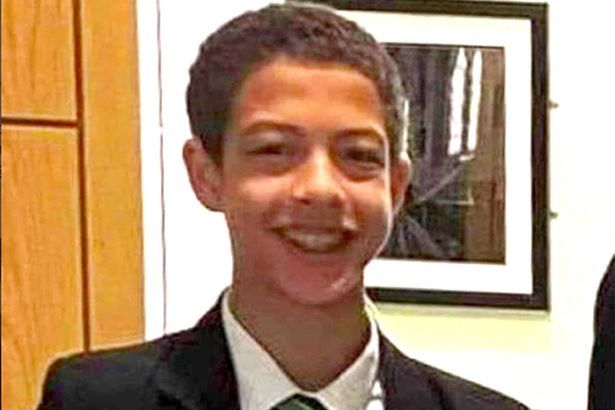
However, jurors also heard a statement from a second expert who concluded 'there is no psychiatric explanation for Noah’s disappearance or death'
2026/06/08
Noah Donohoe may have ‘lost touch with reality’ prior to death, inquest is told However, jurors also heard a statement from a second expert who concluded 'there is no psychiatric explanation for Noah’s disappearance or death' 18:16, 08 Jun 2026 Updated 18:22, 08 Jun 2026 It is possible Noah Donohoe “had lost touch with reality and was in a psychotic state” as he travelled through Belfast on the night of his disappearance, a psychologist’s statement that was read at the inquest into his death has said. However, jurors at Belfast Coroner’s Court also heard a statement from another expert who concluded “there is no psychiatric explanation for Noah Donohoe’s disappearance or death”. The 14-year-old had been planning to meet with school friends at Cavehill after setting out on his bike on Sunday June 21, 2020. He was captured on CCTV cycling through the city centre and then towards the north of the city. In the final clip, the last footage of Noah before he disappeared, he is seen riding the bike naked. His naked body was found in an underground water tunnel on June 27, six days after he left home. A postmortem examination found the likely cause of death was drowning. On Monday, the court heard a statement from Dr Louise Bowers, forensic psychologist, dated October 2021. Among the items Noah had in his possession when he left home in June 2020 was the self-help book 12 Rules for Life, by the author Jordan Peterson. Dr Bowers said Noah was “totally obsessed” with the 12 Rules for Life book which clearly had a “profound impact on Noah and almost certainly influenced some of the changes” seen in the days of June 2020, but alone is not enough to explain “troubling behaviour” before his death. She said Noah was “adored by his mother” and the pair had a “strong attachment to each other”. He also “did not have a history of mental health difficulties” and no evidence he was experiencing any mental disorders, with “no history of self-harming behaviour or suicidal ideation”. Dr Bowers said it is possible Noah had some “traits of autism spectrum disorder (ASD)” but concluded he was a “quirky young man with some obsessional traits” that would not have met the threshold for diagnosis. She described Noah as a “reasonably well-adjusted 14-year-old” but his mother had reported in the days before his death he had become “weepy, his mood was low, had become more affectionate physically and verbally towards her”. He had become “extremely introspective” and “rejected offers” from his friends to talk, being “awake in the middle of the night and searching for things that at times had dark themes”. While Dr Bowers found no events in Noah’s life that may have triggered depression, the illness can develop “without warning in children who were previously well-adjusted”. She said it is “possible Noah was experiencing some symptoms of depression in the run-up to his disappearance”. The psychologist also ruled that Noah was “showing signs of psychological disturbance before he left his house” which became “much more concerning” on departure, and then showed “increasingly disturbed behaviour as he cycled through the city of Belfast”. He went on to discard his rucksack and laptop, before the rest of his clothing, in what Dr Bowers described as a “sequence of unusual and perplexing behaviour”. She ruled that a postmortem examination of Noah’s body made it unlikely to be caused by taking drugs or alcohol or a head injury. She said symptoms of a psychotic episode include hallucinations, delusions and confused and disturbed thought. While 14 “would be very young to be having a first psychotic episode” and it is practically “unheard of” for a psychotic episode to instigate so quickly and be so dramatic, the psychologist said there was “something ritualistic” about how Noah discarded his possessions and that “religious and philosophical themes” can be present in delusions. “It is possible Noah had lost touch with reality and was in a psychotic state leading him to believe he was being instructed to behave in these unusual ways,” her statement read. The inquest then heard two statements from Dr Seena Fazel, a consultant psychiatrist. In his first statement in November 2021, Dr Fazel ruled that Noah’s death was “likely suicide”, but in a statement from March 2026, given after he had seen further material, the doctor concluded “there is no psychiatrist explanation for Noah Donohoe’s disappearance or death”. In his first statement, Dr Fazel said Noah’s “mood was lower and more unstable in the days before his disappearance”, potentially indicating an “acute episode of low and unstable mood which lasted a few days”. Article continues below In his revised statement based on new material – which amounted to more than 700 pages including another psychiatrist’s interview with Ms Donohoe and transcripts of Noah’s friends’ evidence to the inquest – along with discussion with other psychiatrists analysing Noah, Dr Fazel said he does “not think it was suicide on the balance of probabilities”. He said Noah’s “changes to mental state were probably not consistent with an acute episode of low mood”, adding: “I do not think there were any mental health conditions prior to his disappearance.” For all the latest news, visit the homepage here and sign up to our daily newsletter