
Newsletter
Join the Community
Subscribe to our newsletter for the latest news and updates
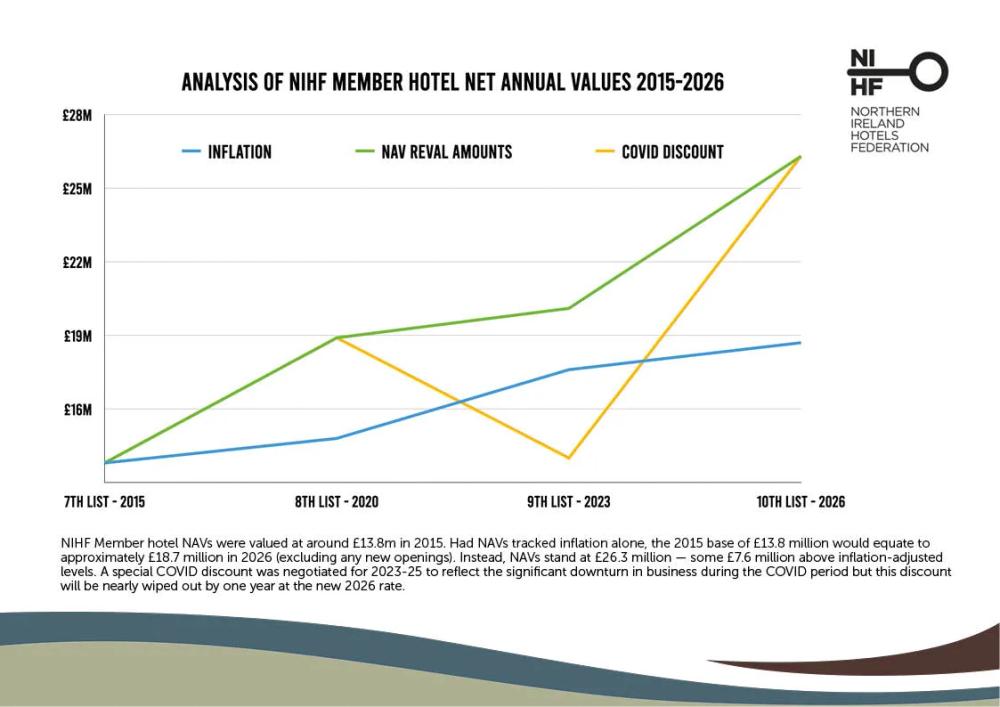
Local hotels, vital to North Belfast's economy, are warning of significant and unsustainable rate increases under the upcoming REVAL 2026. These proposed hikes, far exceeding inflation and without adequate preparation time, threaten local jobs and investment. Urgent government intervention is being called for to protect these essential community businesses.
2026/01/27
Local hotels, cornerstones of our community and economy here in North Belfast and across Northern Ireland, are raising serious alarms about upcoming business rates changes under 'REVAL 2026'. These proposed increases are described as sharp and unsustainable, delivered with insufficient notice and without fully acknowledging the economic realities facing the industry.
Analysis reveals a stark divergence from underlying economic conditions. Since 2015, the valuation of hotel properties (known as Net Annual Values or NAVs) has soared by approximately 90.6%. This is a significant jump compared to the general inflation rate, which has increased by around 35.5% over the same period. To put this into perspective, NAVs for hotels valued at £13.8 million in 2015 are now projected to stand at £26.3 million for 2026 – a staggering £7.6 million higher than if they had simply tracked inflation.
This isn't just inflationary drift; it represents a substantial real-terms escalation. The delayed release of these new valuations until January has severely limited local businesses' ability to plan, budget, or challenge the revised figures. This contrasts sharply with other regions like England and Wales, where valuations were issued earlier, allowing operators more certainty and preparation time. Adding to the burden, the sudden removal of the crucial Covid-19 rates discount has automatically increased NAVs by approximately 30%, with no transitional arrangements to help businesses still navigating recovery, elevated debt levels, and ongoing cost inflation.
Overall, the hotel sector faces an average NAV increase of roughly 87%. While final tax rates (poundages) are still to be confirmed, early indications suggest similar increases, potentially leading to a projected contribution from hotels of approximately £400,000 per week in the 2026–27 financial year. This level of increase is seen as disproportionate and risks undermining investment, employment, and overall competitiveness.
Northern Ireland hotels already operate at a structural disadvantage due to VAT differentials compared to the Republic of Ireland, which has lower VAT rates on accommodation and food. These increased rates will further weaken our tourism competitiveness at a time when cross-border comparisons are unavoidable. Furthermore, significant rises in minimum wages (around 90% from 2015-2026) and rapidly increasing energy costs have drastically reduced profitability, exceeding what headline inflation figures might suggest.
The current valuation methodology places excessive emphasis on turnover while failing to adequately reflect these rising wage, energy, food, and service costs. The hotel valuation scheme also inadvertently penalises investment, as improvements in quality and star classification can automatically trigger higher NAVs, discouraging vital reinvestment in standards and the visitor experience.
Our local hotels have invested approximately £500 million since the pandemic, generated £633 million from overseas visitors in 2024, and collectively support over 70,000 jobs across Northern Ireland. Treating this sector as simply a convenient source of revenue risks long-term damage to one of Northern Ireland's most economically productive industries. Urgent government intervention is required to moderate the scale and pace of these increases and deliver a fairer, more sustainable approach to rates – one that reflects economic reality rather than amplifying pressure at a time of continued structural challenge. Community stakeholders and business leaders are calling on government and local councils to implement measures to mitigate the damaging impact of REVAL 2026, which are essential to protect investment, safeguard jobs, and ensure the long-term competitiveness of Northern Ireland's vital tourism sector.