
Newsletter
Join the Community
Subscribe to our newsletter for the latest news and updates
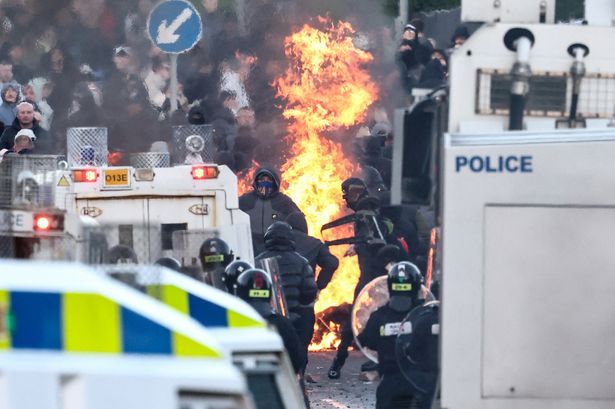
"It is possible to condemn racist violence unequivocally while also recognising that there are genuine public concerns about immigration. But as the extremes dominate the narrative, Northern Ireland’s moderate majority is being left politically homeless."
2026/06/13
The 'woke' left and extreme right have silenced the normal majority "It is possible to condemn racist violence unequivocally while also recognising that there are genuine public concerns about immigration. But as the extremes dominate the narrative, Northern Ireland’s moderate majority is being left politically homeless." James McCarthy Political Reporter 09:18, 13 Jun 2026 Northern Ireland spent decades learning that democracy is built on managing deep, painful disagreement. Yet the disturbing scenes witnessed across our communities this week suggest we are rapidly forgetting that hard-won wisdom. What began as public anger following a serious knife attack in North Belfast quickly descended into street violence which serves as a stark reminder of how fast legitimate public anxiety can be weaponised when a society loses its ability to talk. Whatever concerns people may have about immigration , asylum policy or integration, there can be no justification for mobs roaming the streets looking for targets based on the colour of their skin or where they come from. That much should not be controversial nor should it be controversial to acknowledge that the violence did not emerge in a vacuum. One of the most striking features of the past week has been the apparent inability to hold two thoughts in our heads at the same time. It is possible to condemn racist violence unequivocally while also recognising that there are genuine public concerns about immigration which deserve to be discussed. It is possible to reject collective blame while still asking legitimate questions about asylum policy, community cohesion and pressure on public services. Increasingly, however, we seem incapable of operating in that space and instead, we are encouraged to pick a side. The immediate aftermath of the illustrated the problem perfectly. Before many facts had been established, social media had already reached its verdict as clips of the incident were shared, claims circulated and narratives constructed. The attention economy that we are now operating in rewards certainty, outrage and emotional reaction and it is clear that nuance is bad for engagement. This results is a system where the loudest voices are elevated while the most thoughtful are drowned out. That dynamic has helped create a political culture in which disagreement is no longer treated as something healthy or necessary but as evidence of moral failure. We see the exact same rigid orthodoxy applied across the political spectrum. Raise concerns about immigration and there is a good chance someone will brand you a racist. Express reservations about aspects of gender policy and accusations of transphobia may quickly follow. Take the opposite position and you may find yourself dismissed as being "woke", part of the "looney left" or an out-of-touch liberal elite. This creates a pressure cooker atmosphere which ultimately leads to the scenes we have seen play out. None of this is to suggest that racism does not exist. The events of recent days, and those which we saw play out in 2024 following the Southport attack and last year's riots in response to the incident in Ballymena , provide ample evidence that it is a major problem in Northern Ireland. Nor is it to suggest that prejudice should be tolerated under the guise of legitimate debate. The difficulty is that our public discourse has become increasingly incapable of distinguishing between genuine bigotry and good-faith disagreement. As a result, difficult conversations are not being resolved and are simply being driven underground. Northern Ireland should understand the dangers of that better than most places. For decades, this society was defined by deep and often irreconcilable disagreements. The lesson that eventually emerged was not that everyone had to think the same way, but that people had to find a way to continue talking despite those differences. That principle now feels increasingly fragile. The growth of social media has undoubtedly played a role. Platforms designed to maximise engagement have discovered that anger is profitable. Content that provokes outrage travels further than content that encourages reflection. The most extreme voices on both the left and right therefore receive disproportionate attention, creating the impression that they represent far larger swathes of the population than they actually do. Most people do not spend their days obsessing over culture war disputes. Most people occupy a far messier middle ground. They may support immigration while wanting honest discussions about integration. They may support transgender rights while still wrestling with difficult questions around sport or single-sex spaces. They may hold views that do not fit neatly into ideological boxes. Yet increasingly, those people are finding themselves politically homeless. The danger is that people stop participating altogether as when every disagreement is treated as evidence of hatred or ignorance, people learn to remain silent as when reasonable concerns cannot be expressed through mainstream channels, others will inevitably step in to exploit the vacuum and that is precisely what extremists depend upon. The violence we have witnessed this week is a reminder of where that road can lead. Criminals and racists were able to exploit legitimate public anxieties and redirect them towards entirely innocent people. They could do so because the conversation had already become polarised long before the first brick was thrown. Democracy depends on our ability to disagree without demonising one another. It depends on recognising that someone can be wrong without being evil and that questioning a policy is not the same thing as attacking a person. That is not always comfortable and it requires patience, humility and a willingness to engage with arguments we may dislike. Article continues below But if we lose that ability, the loudest voices will continue to dominate and as this week has demonstrated, they are rarely the voices with the most to offer. For all the latest news, visit the homepage here and sign up to our daily newsletter here.